
.png)

Programs
.png)
The San Diego Science Project at UC San Diego co-creates programs and learning hubs to support the interests and needs of science educators throughout the San Diego region.
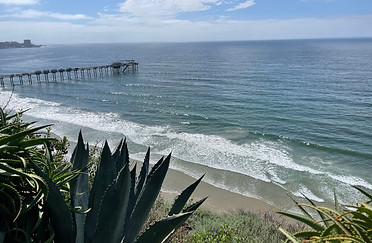
In partnership with the Scripps Institution of Oceanography and the Birch Aquarium at UC San Diego, join one of our in-person events where we explore climate-based phenomena with researchers and learn how to apply the Understanding Global Change (UGC) framework to instructional practices and curriculum development.

Students encounter science claims through social media, news, online searches, and generative AI chatbots. Students need science media literacy: the ability to evaluate who is making the claim, whether the source is credible, and how to recognize the tactics used to distort or deny scientific consensus. We offer annual workshops on how to integrate evaluating science claims into any science course.

Listening to Waves, a project sponsored by the National Science Foundation, seeks to inspire students to develop a deeper appreciation of both science and sound. We aim to transmit to the students the sense of wonder that we feel towards the sonic world, helping them become aware of the sounds in the environment and draw a connection between the perceptual and physical aspects of sound and music.

Curriculum resources and professional learning for science teachers to integrate computer science and computational thinking into science instruction. Science researchers regularly use computational thinking to make sense of data and to program instruments. As a core science and engineering practice, visit this page for resources on how to integrate computational thinking and coding into your science instructional practices.

To support teachers with implementing Climate Education and Understanding Global Change, we offer Refresher Workshops and monthly Community of Practice Meetings.

A professional learning series designed to build K-12 teacher’s understanding and skills in designing and implementing a student-centered assessment system in their classroom aligned to the Next Generation Science Standards (NGSS). Participating teachers build their assessment literacy skills as they create a vision for student-centered classroom assessment, learn to use tools to analyze assessment tasks, and design equitable formative and summative science assessment tasks.

The San Diego Science Project in partnership with the Jacobs School of Engineering is developing curriculum resources to integrating problem solving practices into science instructional units.

ATLAS (Authentic Tasks for Learning and Assessment in Science) is California's statewide, openly accessible library of vetted science performance tasks aligned to the Next Generation Science Standards. The San Diego Science Project partners with teacher leaders and researchers to develop performance tasks for California's statewide ATLAS library, connecting classroom science to student lives and communities.